Selection

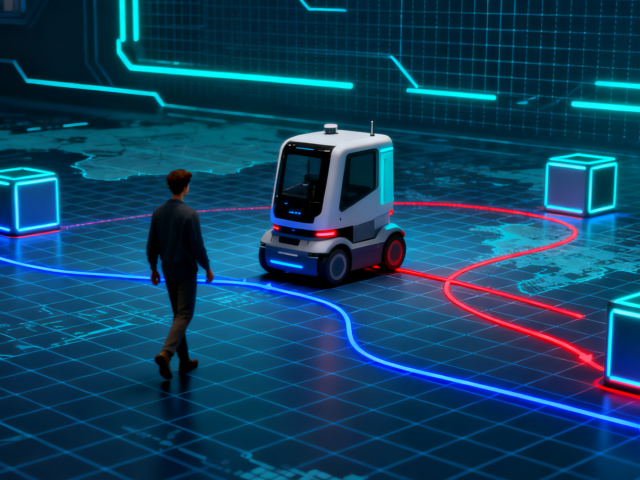
auto follow obstacle avoidance and path planning

Obstacle Avoidance and Path Planning Explained: From A to DWA — Which Works Best for Follow-Me Robots?

In the world of autonomous following vehicles, “accurate tracking” is only half of the challenge. The real test lies in ensuring the robot can follow smoothly while safely avoiding obstacles in complex environments. Behind this capability are the path planning and obstacle avoidance algorithms that form the brain of every intelligent mobile platform.

Obstacle Avoidance and Path Planning Explained: From A to DWA — Which Works Best for Follow-Me Robots? Read More »

Multi-Sensor Fusion for Follow-Me

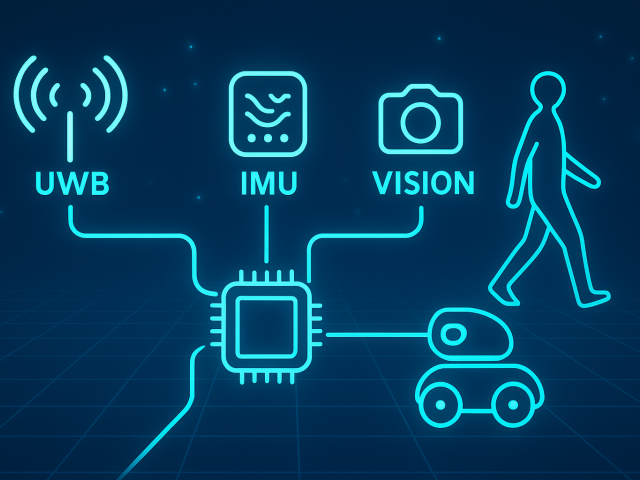
Guide to Multi-Sensor Fusion for Follow Me System: Architecture and Challenges of UWB + IMU + Vision

UWB provides precise positioning but suffers from signal blockage; IMU can capture rapid motion but accumulates drift over time; vision enables human and environment recognition but depends heavily on lighting and computation. As a result, the combination of UWB + IMU + Vision has become a mainstream solution in the industry. This article explores its architecture, workflow, and the key challenges faced in real-world deployments.

Guide to Multi-Sensor Fusion for Follow Me System: Architecture and Challenges of UWB + IMU + Vision Read More »

uwb vision lidar autonomous follow-me

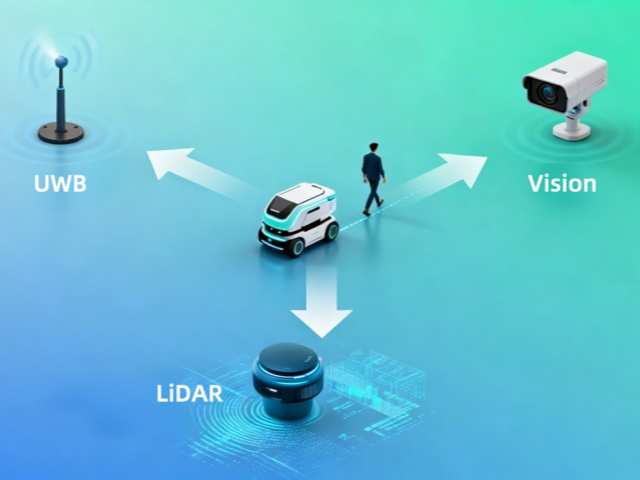
A Comprehensive Overview of Follow-Me Technologies: UWB, Vision, or LiDAR – Which Is the Best Choice?

n recent years, the market for service robots and intelligent mobile devices has been evolving rapidly. Follow-me technology has moved beyond being a mere concept and is now powering real-world products. From autonomous luggage in airports to smart shopping carts in retail stores and assistive wheelchairs for seniors, the core capability behind all these innovations is the same: how to reliably identify and track a user while navigating in dynamic environments.

A Comprehensive Overview of Follow-Me Technologies: UWB, Vision, or LiDAR – Which Is the Best Choice? Read More »